When source and target applications don’t agree on where a member belongs, you need a strategy — not a workaround. Here are two battle-tested approaches.
In EDM, it’s common for application viewpoints to require a different hierarchy structure than the source viewpoint for certain base members. The parent-child relationship that makes sense in your GL application may look completely different in Planning or FCC.
The good news: you don’t have to break your regular parent/child relationships to solve this. Today we’ll walk through two approaches to handle these structural mismatches cleanly.
1, The Lookup Method
Use this method when a parent in the source viewpoint maps directly and predictably to a specific parent in the target viewpoint — and that mapping is stable over time.
When to use it: The mapping is known, constant, and won’t vary member-to-member. Think of it as a simple translation dictionary between two parent namespaces.
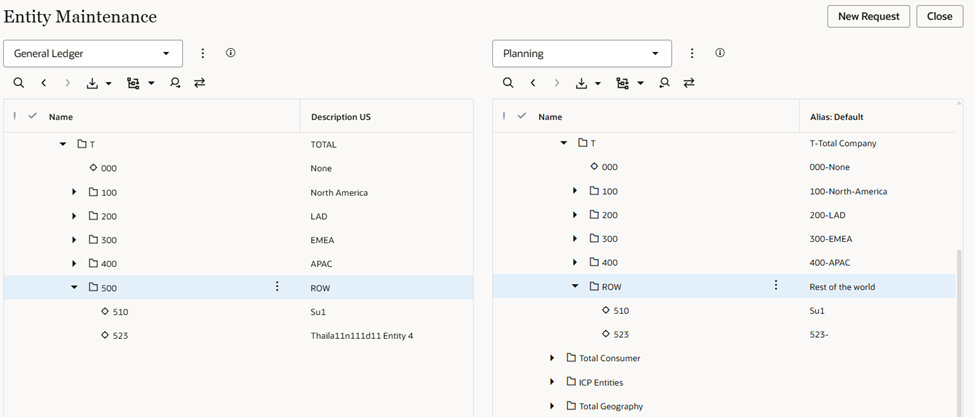
How to set it up
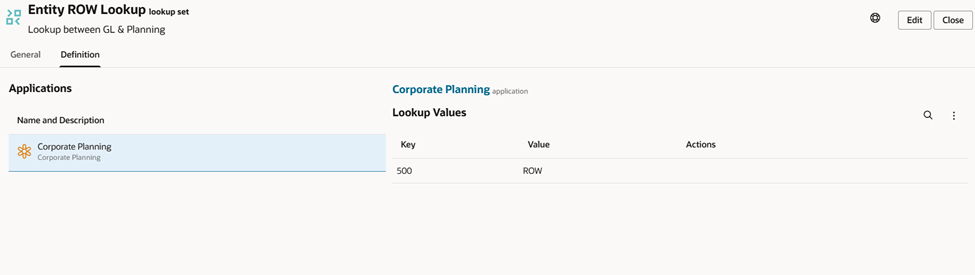
Create a Lookup Set that defines the parent-to-parent translations. Add as many member mappings as needed.
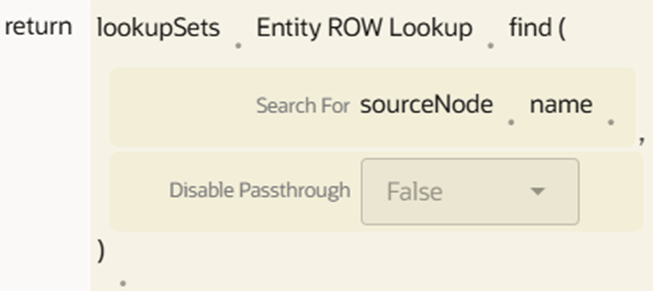
In your converter, navigate to the Parent column and select the Transform option.
2, The Stage Viewpoint Method
When the target parent varies member-by-member with no predictable logic, a lookup table won’t cut it. This is where introducing a custom node type property and a pair of stage viewpoints gives you the flexibility you need.
When to use it: The target parent differs for most or all members and there’s no algorithmic rule to derive it. The mapping must be maintained by users directly.
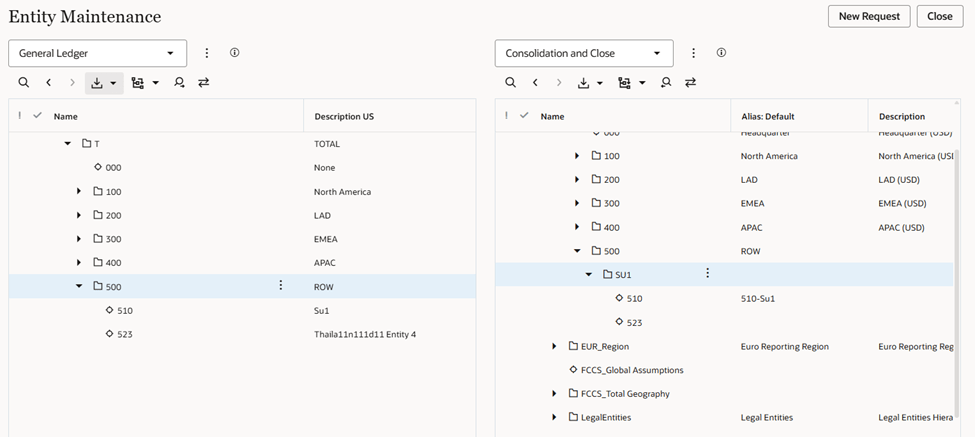
we can handle these situations by introducing a custom node type property and couple of stage viewpoints.
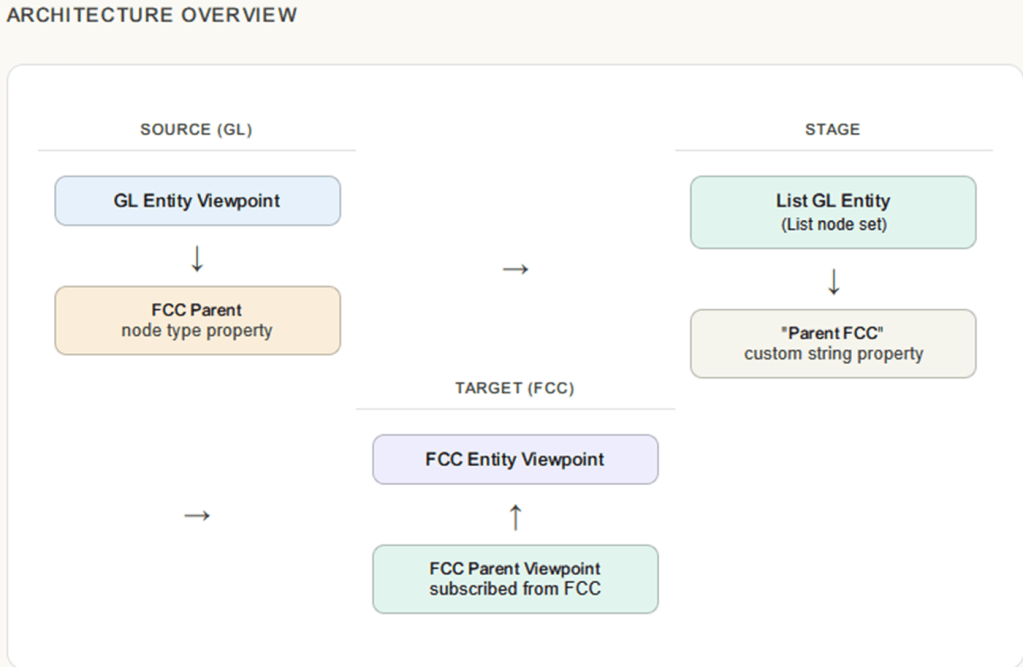
We created a FCC parent and List GL entity viewpoints in Source applications.
FCC parent viewpoint is subscribed from Target FCC hierarchy and contain all FCC entity viewpoint members.
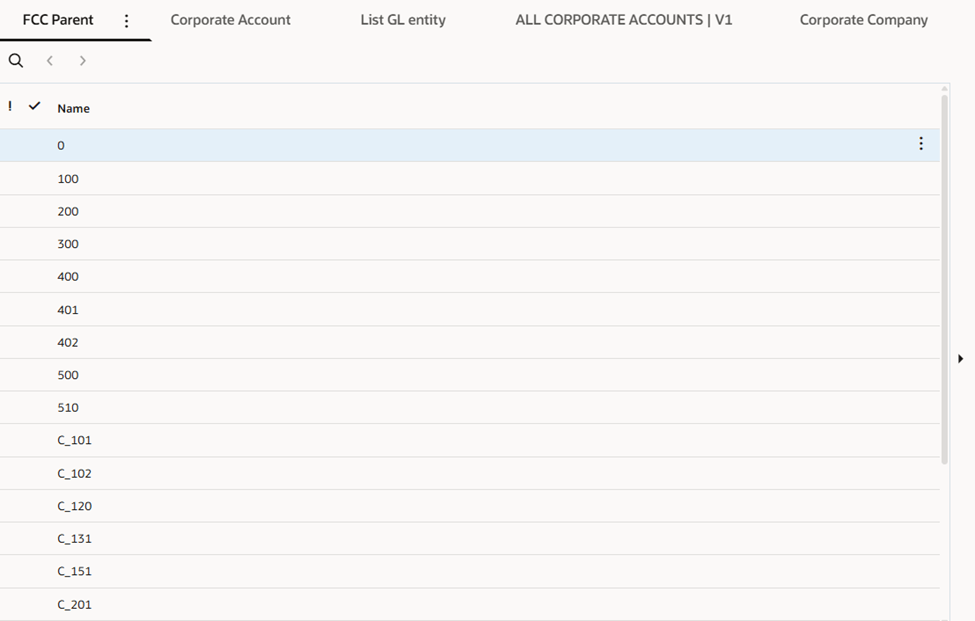
we created a FCC parent which is node type property to point to FCC parent viewpoint.
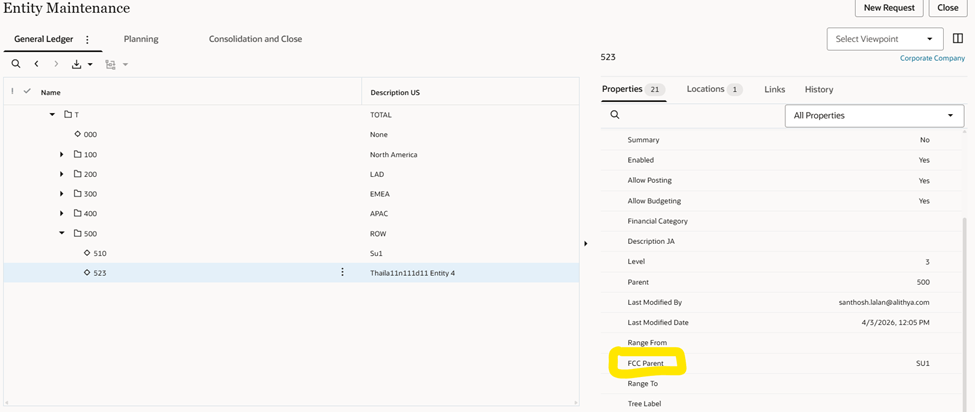
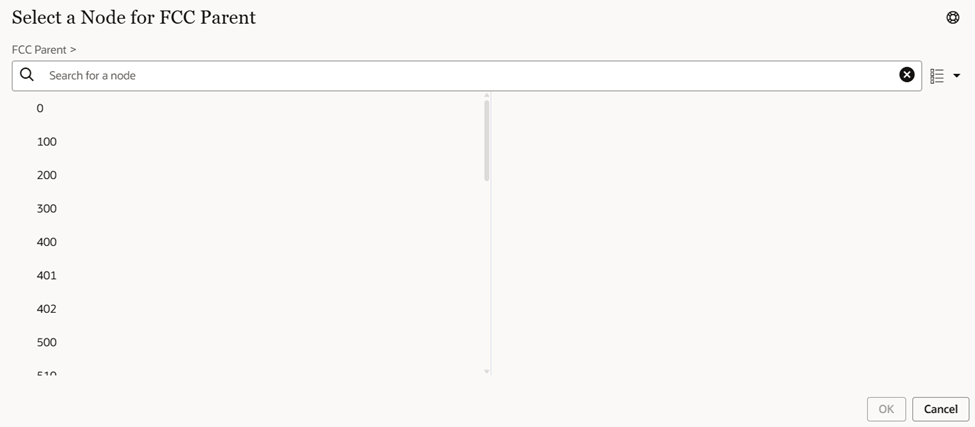
So user get to choose the parent indirectly from the FCC entity viewpoint when they create a request
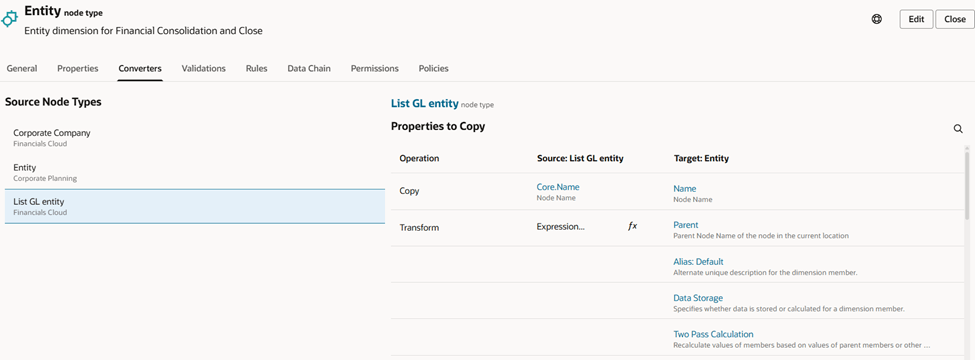
The source GL entity viewpoint is subscribed to the List GL entity (List node set) viewpoint. since this is list node set , it doesn’t have parent column , we created a custom string property called ” Parent FCC” to hold the parent information.

As shown in the screenshot below , the FCC parent column in the source is getting transformed to the Parent FCC column.

Now the FCC Entity viewpoint is subscribed from List GL entity and takes the parent from this Parent FCC value.
The following architecture diagram depicts the end-to-end flow of parent values from the source to the target environment.
Conclusion
Hierarchy mismatches between source and target viewpoints are an everyday reality in EDM — and they don’t have to be a roadblock. The key is choosing the right tool for the complexity of the problem.
When the parent mapping is straightforward and stable, the Lookup method keeps things simple and maintainable with minimal setup. When the mapping is irregular and varies member by member, the Stage Viewpoint method gives you the structural flexibility to handle it cleanly without compromising your core hierarchy.
Both approaches share a common philosophy: solve the translation problem at the integration layer, not by bending your source or target hierarchies out of shape. Your applications stay clean, your users stay in control, and your metadata flows the way each system expects it to.
As your EDM landscape grows — more applications, more viewpoints, more edge cases — having these patterns in your toolkit means you’ll spend less time firefighting and more time building a hierarchy structure that scales.
 Site Title
Leave a comment